
Have you tapped into your Divine Feminine? Well let’s pause briefly I have to ask, do you even know what that means? If the answer is no, that’s okay. Safe to say many of us do not and are learning what it is in true it’s essence daily. The concept of the Divine Feminine has been around for centuries, having been study by many religious groups and students since the construct of religion. When we look at images spanning from Christianity to Hinduism and crossing over to Vodun there are sacred text, teachings, images, and relics that speak to the attributes of the Divine Feminine. Many will say they do not dabble in symbols and relics however, EVERY religion and spiritual practices holds at least 1 symbol and/or relic dear to their belief, faith, and practice. Some of those symbols and relics are shared and/or reimaged to fit that specific practice.
What Is The Divine Feminine?
The Divine Feminine is an energetic and/or spiritual essence that dwells within all living creations. Yes, this includes plants, animals, bugs, dirt, rocks, trees, the sun, moon, stars, and other humans; the universe as a whole. Why do I say this? Because in the time of Enoch and Moses (for all my Bible lovers) the practice and belief was and still is for many cultures that we respect all living creations as our family. Also historically we observed the stars above because God is in all living things and can guided us through all things. This is where the term omnipresent is rooted, not solely God sees all and knows all. When we take a look at science, all living creations have a feminine and a masculine. Plants for example, have male and female aspects. Some are within a singular plant while others are separated into specific variations of that plant or areas on the same plant it self. Meaning their are plants that blossom and encompass both the masculine and feminine components ( think cherries and plums). While some plants that blossom may be solely comprised of the masculine aspects or the feminine aspects ( think kiwi or asparagus) however, there are plants that can be broken in to two allowing separate structures to be masculine or feminine( think squash and cucumber).

The concept of the masculine and feminine is also seen in many ancient dialects such as Hebrew which uses a distinction between masculine and feminine words. The sacred words Shekinah and Ruach are seen throughout many ancient text as a Feminine word in historic Literary context. See Ruach is an Aramaic word that is mentioned throughout the ancient Hebrew Bible and later seen as Ruah in Hebrew when speaking of the presence of God. Shekinah is a word I am personally familiar with as I traveled with a dance group called “Shekinah Glory”. Shekinah is a used within Rabbinic Literature when discussing the presence of God. In the Quran the word is seen as Sakina instead.
If you are reading this and you’re thinking “Nikki how can words have gender this makes zero sense” Well, in English this may be true however, there are many language that have a grammatical gender rule when learning to speak, read, and write.
Because of the feminine nature of Ruach and Shekinah historically many scholars and church clergy alike attributed the Holy Spirt to be the nurturing maternal side of God. Some even went as far to say that the Holy Spirt is Mother-God or God the Mother. Essentially this would be the Divine Feminine we speak of. When we look at the word Ruach or Ruah the meaning or definition is Life, Breath, and Spirit. And when we look at the word Shekinah it’s the literal presence of God within a space or visible temple of God. This also refers to the scriptures referring to the church being the bride and Christ loving the church. Ruach/Shekinah brings forth life and is life within and between all spaces. This is not biblify the Divine Feminine it is to merely draw attention to one of many historic origins. Historically Shekinah was revered as a god head in her own right as God the Mother next to God the Father in Ancient Judaism. Acknowledging this allows for a sense of duality and balance. As we zoom in further the name of God “YAHWEH” is a name of duality and balance in it self ;Yah-Feminine, Weh-Masculine.
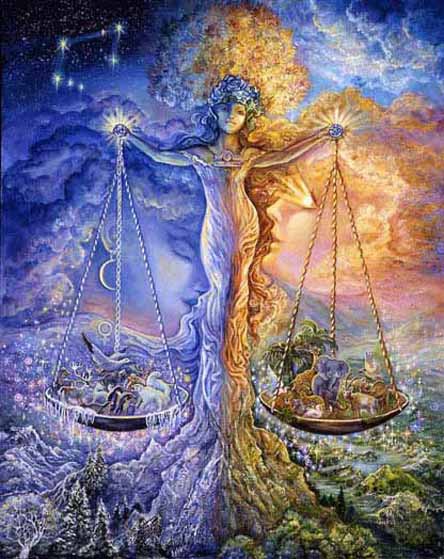
Often times we have the misconception that the Divine Feminine is solely about sensuality and sex. Or on the other hand we carry the maternal image of the Divine Feminine. However, truth is there are many sides to the Divine Feminine. The the Divine Feminine is about depth. Think of an ocean, it there are many pockets to the ocean as there are many pockets to the Divine Feminine. Because of this the Divine Feminine is powerful; the fluidity of this energy give great strength.
The Divine Feminine is:
- Flexible or Fluid: When we are in our Divine Feminine energy we are less rigid in our thinking and behavior. When we are less flexible and rigid we are in survival mode and/or we are experiencing instability. When we are in our Divine Feminine we are able to allow nature to run her course as well as trust our intuition, our work, and that the most high will provide our needs.
- Nurturing: The Divine Feminine energy is naturally nurturing and giving. This is our maternal instinct which allows us to take care of people we love and care about. This is also our natural ability to turn nothing into something. Meaning that if we have a vision or a goal we are able to make a way or as some people say manifest; which may also look like if our masculine counterpart provides a vision and/or direction we have the natural capacity to bring into to fruition. Fruition also has to do with being fertile. Fertility while it correlates to pregnancy and children, also looks like abundance and being able to turn dreams into reality. To be fertile and bring things into fruition one must be nurturing. Divine Femininity is to be able to nurture what we already have to draw near and maintain the fruits we will bear. Like a garden.
- Life: The Divine Feminine is a life giver. To be fruitful and fertile is to be the bearer of life. The Divine Feminine is the ability to give life out of darkness and to sustain life in times of darkness.
- Mystic: To be mystic is to be one with the spiritual realm. Historically woman have been the warriors of the spiritual realm while our masculine counterparts are the warriors of the physical realm. Tapping into our Divine Feminine is connecting to the Most High to build a relationship and tap into god within. When we think of the Divine Feminine we think sensuality. However, it is the connection with self and spirit that causes one to exude a specific essence.
- Wisdom: The Divine Feminine is a teacher. As one taps into their Divine Feminine and communes more with self and spiritual realm the more wisdom is developed. There is a proverb that says,” If you teach a man you are teaching one person, If you teach a woman you teach nation.” Wisdom is obtained by putting knowledge into practice and gaining experience. A mother is a childs’ first teacher from the womb to birth and rearing. Also, a wise woman is a healer and medicine woman in the homes which is oftentimes protecting and respected.
- Respect & Order: Have you herd the parable of Osun leaving the Orisas because they did not respect her place in the order? Well if not the result was chaos and lack of order ensued. This is not to say that the Divine Feminine is more important than the Masculine. It is to say they the energy is presence is needed for balance. The Divine Feminine is the commander of respect and order due to being the pace and energy setter. This is why historically the woman stayed back in the village while the man gathered or stayed in the home while the men left out. The maternal figure is who says no shoes in the home. The maternal figure says no arguing in my home. The maternal figure is who sets up the home in a specific way. The Divine Feminine is the alchemist of the home. Energy is set and maintained a certain way in the home. Our masculine counterparts enforce and reinforce this order.

Many Forms of The Divine Feminine
When we think about the Divine Feminine we think of the Divine Mother. The nurturer, the birther, the one who sets the the pace. Essentially, we think of a Maternal or Matriarchal figure, for example Mother Earth. Earth is what we are made of, it provides us our nutrients and it has the capability to reset and heal it self time and time again. No matter how much we build the earth can reclaim what it hers over time. While in most religions God is male or a paternal figure, most cultures have artifacts and stories pertaining to the Feminine essence of God. For example, Gaia is a the Greek name which is said to be the name of the great mother of all creations. Gaia was first documented as Mother Earth or Mother Nature, the mother of all gods and living creations. The story of Gaia is similar to the creation story in the Bible that many of us know so well. Across the globe we see the Divine Feminine represented in Mother Mary (once known as Mother Goddess), Mariam of Magdalena (Mary Magdalen), Shakti, Kali, Venus, Ala, or Oshun. Each of these pantheons represent the Divine Feminine in Christianity, Hinduism, Igbo, or Yoruba, and more. Across the world the Black Madonna has been the image of Divine Femininity. When we visit Orthodox Christian and Catholic Institutions the Black Madonna is on display.
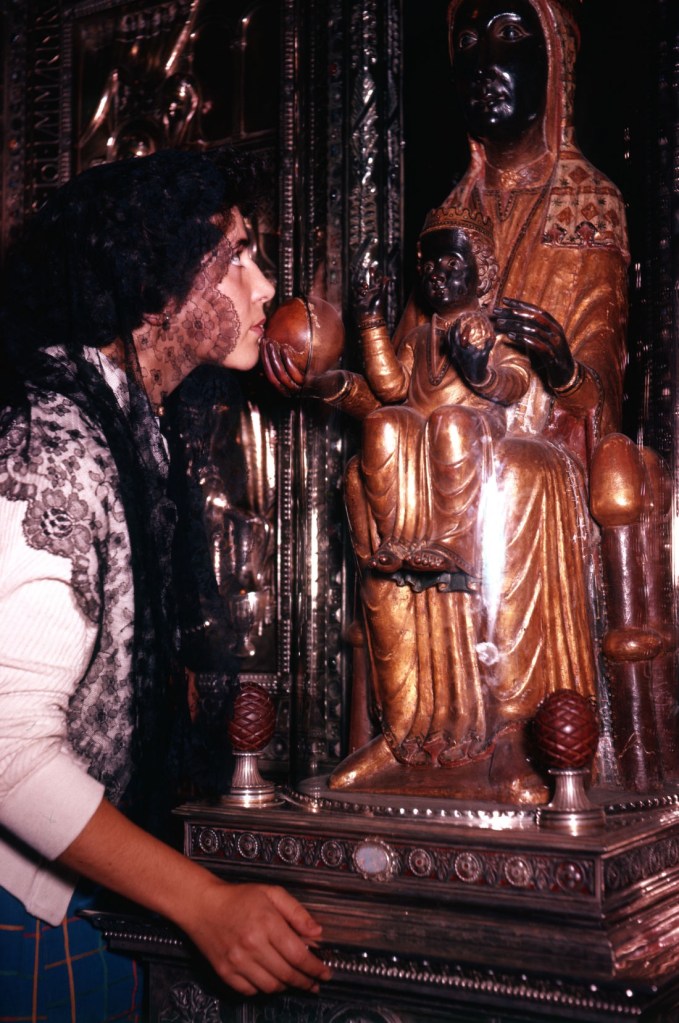
“She is the mother of universes, identified with the primordial darkness and chaos of the universe, and with the moist and fertile black earth.” Her many historical incarnations include the Roman goddess Ceres, the Anatolian and Roman Cybele, Artemis in ancient Greece, Kali in India, and the Ancient Egyptian Mother Goddess Isis. Like the Black Madonna, these and a host of pre-Christian goddesses associated with the earth and fertility were commonly depicted as crowned, seated on a throne, and holding a divine child on their lap.
Dr. Oleszkiewicz-Peralba believes that, in addition to her mystical and agricultural connotations, the Black Madonna also speaks to an ancient cultural memory of the African origins of humanity, representing the original mother of Earth’s children. “It is a memory that people all over the world carry. Because of this, blackness has a very strong symbolic meaning connected to love, nurturing, protection, transformation, power, wisdom, fertility, and justice.” Perhaps this collective memory contributes to the fact that the dark-skinned representations are the most revered icons in Mariology, and that the darker the skin, the more devotees and the higher the number of miracles associated with the icon.
UTSA Ovations
The Divine Feminine is not a cookie cutter embodiment there are many phases and faces to the Divine Feminine. This is because as we grow we go through many phases in life. Each of these phases encompass where we are in our feminine journey. The same holds true for our masculine counterparts as well. Each phases of our feminine journey is marked by an archetype; keep in mind each phase and archetype has nothing to do with age. However, it has all to do with mindset and maturity. The feminine archetypes of the divine feminine consist of Maiden, Wild Woman, Mother, and Crone was birthed. A concept that has been explored and adjusted over the centuries to make sense of society and spirituality. What has been a constant in this archetype predating discussion and religious institutes is the fact that women have been able to sync their menses to the moon cycles. Each phase of the moon has given insight to what phase a woman was in her life. For example, if a woman bleed on the new moon and ovulated on the full she was in her Mother/Nurture phases. It was believed that if you were in sync with the Waxing, Waning, Full, and New Moon Cycle you were in some way in tune wit the Divine Feminine because you were in sync with Mother Nature. We see the many phases in stories like Mary and Mariam of Magdalena. We see Mary as the Mother Archetype while Mariam of Magdalena was seen as a Wild Woman who later evolved into a Wise Woman or Crone.
Connection
The Divine Feminine and Masculine is not about gender it is about energy, natural urges, natural tendencies, and roles within the physical and spiritual. The Divine Mother has a role as does the Divine Father which has to do with maintaining order/balance. Both men and women poses masculine and feminine energy; depending on the person, environment, and situation one energy will be more dominant. When we are operating in our feminine energy we will carry our selves and handle situations in a specific way; the same is true when we are operating in our masculine energy. Naturally women will be more in tune with their Divine Feminine and/or can tap into their Divine Feminine with ease when safe or guided. As nature would have it Divine Masculine and Feminine work together to provide order, balance, and harmony. Both element coexist in spirit and flesh. One is not over the other as both are important in the creation and sustaining of the physical and spiritual realm. When things are out of balance we see the results of confusion, chaos, and lack of understanding.
Conclusion
The Divine Feminine is an intricate part of both the spiritual and physical. This is an energy that is multifaceted and lives not only within us all but around us as well. To not have this essence there would be no life, after life, or new beginnings. For centuries the images and essence of the Divine Feminine has been worshipped and/or acknowledged and still is in subtle ways across religions and cultures. Because if this there is not just one form or image of the Divine Feminine because the Divine Feminine has multiple phases as well as expressions. The Divine Feminine is who and what we first meet within the mother’s womb and is who cradles in our internal slumber. The Divine Feminine is an energy that is hard to explain and even harder to contain. The resounding call across the nation is to remember and re-member the Divine Feminine rather than hijack or reimage. To remember is to tap into and find balance within the multidimensional experience of being a physical and spiritual being. Welcome you Divine Feminine for what it is within you and your personal experiences.
My Thoughts, My Views,
P.S. The Healing Yogi
Cover Art By: IG Fama @ig_fama
 PS. The Healing Yogi