
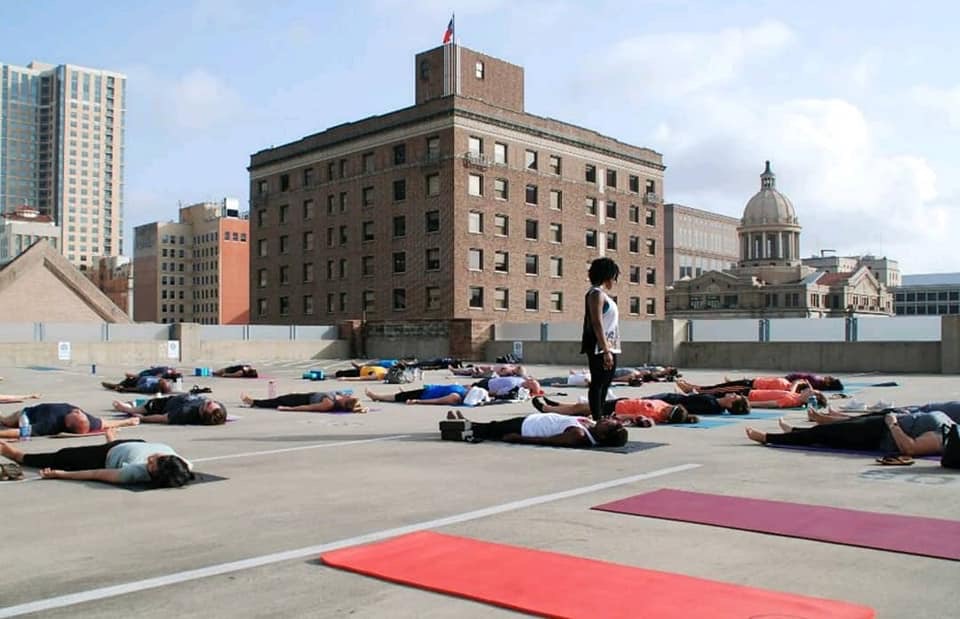
Over recent years there has been an increase in talks and workshops geared towards cultural competence and creating inclusivity within yoga, mindfulness, wellness, and mental health spaces. During this time there has been an uptick in trainings regarding what is deemed culturally acceptable and what is not. As well as strides taken to decrease cultural appropriation and offending others. Many of this steps have been taken with good intentions, or one can assume. However, what has been observably noticeable is a vast majority of those workshops and trainings are led by non people of color. It warrants the question, “does one not need our input on what makes us feel safe, included, and/or comfortable!?”
When thinking back to my experiences, being a Yoga Teacher and Mindfulness Facilitator has landed me in rooms I would not have imaged as a child. However, It has also placed me in environments and situations that have been less than desirable or comfortable. Before starting my teaching journey I made it a point to develop my practice in the comforts of my home to rehab my injury which you can read more about here. Once I followed my passion for teaching it was on right I join a studio to sharpen my craft. Before I landed at my home studio, trial and error taught me yoga was not a space black men and women frequented. Being the only black person was not my problem; the lack of warmth was. My first experience taught me not everyone offers assist, guidance, or variations. It also taught me some instructors will laugh as you struggler rather than offer help. My second experience taught me not all yoga studios are the same and there are many branches of yoga. As a result I realized my path to yoga teacher training may be more of a gauntlet where people are chosen similar to prospects under gurus. It also taught me some people believe yoga is not for black people.
After becoming a certified yoga instructor my journey was not a crystal stair. I was reminded of the stereotypes associated with being a black person. Multiple contractors reminded me that I was “one of the good ones” and that I must feel so fortunate. A golden moment I will remember for some time is when I was assumed to be a single mother who struggles to find help and consistent work. The problem was not the stereotypes, I know they exist I fight them daily. The issues was the sureness and the arrogance. In each exchange there was no question or curiosity to learn more about me as a person; it was presented as a fact as though they had already knew me. I vowed to myself to never allow this behavior again.
Why is there a sureness that others know black people and other people of color better than we know ourselves?
What Makes A Space Become More Inclusive?
What is inclusivity to you? When I ask this question on my social media regarding yoga and wellness spaces the answers were not complex. It came down to seeing brown and black bodies, curvaceous bodies, and a playlist that felt familiar and relaxing. If the answer is “simple” why are people missing the mark? Oftentimes it is not about the words or jargon, nor is it about the aesthetic. While these things may draw people in, it is not going to help with retention and community building.
Why do I say this? Black & Brown people very seldom have spaces designed or created for or at least with us in mind. Because of this we create our own spaces. This is because we want to build connections and feel safe enough to let our guard down a little. Connection helps attends feel safe. Yoga is a vulnerable practice where we are participating in uncomfortable poses which are designed to cause emotions to come forward. If a person feels unsafe they will not trust the practice which will result in someone either opting out of participating or getting injured. When we talk about feeling connected, we are speaking to the sensation we feel when we see another brother or sister in class or as our instructor. We instantly feel seen, understood, and safe because it is a familiar feeling. However, it does not end there. The connection goes beyond just acknowledging each other; it is taking the time to speak and ask questions to truly assess the needs of those in the space.
What helps a space become more inclusive is by listening to the people we are wanting to connect with or draw in. A common need that is requested is “culturally relevant music”. A common misconception is black and brown people only like rap or “turn up music”. Culturally relevant music is also RnB, Neo Soul, Lo-fi Hip-hop, and Alternative Music or Indi Artist. Inclusivity also looks like offering alternative postures and ways of getting into specific yoga poses. A common feedback I received as a yoga therapist and instructor was clients and attendees felt seen and cared for in class and sessions because I was always watching and adjusting. Inclusivity is being attentive and intentional. In classes, periodically coming off of our instructor mat to walk around and get close and personal facilitates safety. As we walk around the space we can offer adjustments and corrects. A small smile or head nod also goes a long way. A deterrent in yoga spaces can be calling people out for doing something incorrectly, giving the impression of being scolding or laughed at. If we walk around we can gently approach someone and correct them without losing the flow and energy in the space. Lastly, many black and brown women have expressed wanting to see more people that look like us. This is not just about skin color. It is also about body type. Black and brown women are curvy, full, and some of us even have a more athletic body type which means it may take time to build flexibility. Oftentimes seeing people that look like us doing what may feel impossible in the moment gives us the courage and inspiration we need. And on the other hand if our peers are struggling along side us it can alleviate the pressure and self-judgment. Building inclusivity is not solely about hiring all spectrums of the rainbow or changing marketing strategies. It also takes being open to new ways of showing up within the space. This does not require learning all the new hip songs or all the ebonics words one could find. All it takes in being radically genuine and speaking each body in the space with intent and gentility; but most importantly stepping out of the stereotypes and assumptions to truly learn about the subculture you are interested in by getting into the community to talk to people and off of the internet professors.
In A Nutshell
As we zoom out and look at the bigger picture, inclusivity is not a one time simple fix where we place a a committee together to discuss what it is or hold workshops on how to be more inclusive without hearing from the community itself. It also is not telling the community what it is and what we need or appearing more “hit”, “down’, or ‘urban”. It is engaging with the community, allowing us to lead the conversation, and shifting the environment and how one shows up in that environment. When fostering a a safe space built on connection and inclusivity here are some things to consider:
- Create a warm environment from beginning to end. Welcome attendees as you see them come in. Granted we can not speak to everyone as they come in we as instructors are doing many things. However, do what you can and make time for an intro at the beginning of class. Introduce yourself, ask if anyone has something they would like to work on in class, or any specific accommodations (this can be down as you are checking people in or asking a few minutes before class starts as well.)
- Offer modifications in class. Let’s be honest their are people who will not be able to do everything we throw their way in class. Because we know this it is only fair we offer modifications. People come to yoga for many reasons and while we may not be able to cater to every reason; we can meet people where they are. Each yoga pose has multiple are at least one alternate variation. Will this change the are of the body we may be wanting to target in the yoga series? Maybe. However, change is the only constant and if we are speaking to being inclusive, it behooves us to be willing to accommodate those who may be struggling to prevent an injury and entice people to come back to continually build mastery.
- Build awareness and educate. Many people are trying yoga for the first time. Because of this many do not know what they are doing and why. A great way to correct people who may be doing a posture incorrectly is by creating an educational moment. One may pause class and demo the proper way to get in and out of a posture; this gets the whole class involved and tuned into the present moment. Another route may be to speak to the proper alignment and the reason we do a specific yoga pose while people are actively in the pose. Both options share the same effect and reason. This allows people to walk away feeling empowered and as though they have learned some thing.
- Get personal. Let’s face it we are in a confined space some of us in a heating room others in a room temp atmosphere doing uncomfortable yoga poses, it doesn’t get much more personal than that. Rather than remaining on the mat allowing people to do poses however they choose, perhaps walk around from time to time and actively correct and adjust people. At the beginning of class during that intro I suggested you can inform attendees of you teaching style and how you may come around to assist during class. This is also a great moment to let people know they have a right to refuse if they would like. Walking around and offer hands on assist give attendees a more personable experience and build trust and safety.
Is this a blog proclaiming to have all the answers on inclusivity practices? No not at all. It is simply a black woman owned wellness brand offering solutions and suggestions where she see’s the need along with other black men and women owned brands.
Tell us what you think would help yoga and wellness spaces be more inclusive.
My thoughts,
My views,
Share with me, Vibe with me.
PS. THE HEALING YOGI
 PS. The Healing Yogi